When two surfaces rub together, the irregularities on the surfaces interlock, creating resistance to motion. This resistance causes the surfaces to heat up, as the kinetic energy of the moving surfaces is converted into thermal energy. The amount of heat generated depends on the force of friction, the speed of the motion, and the coefficient of friction between the two surfaces.
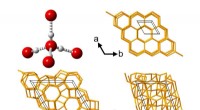
At the atomic level, dynamic friction can be understood in terms of the interactions between the atoms on the two surfaces. When the surfaces are moving relative to each other, the atoms on the surfaces collide and exert forces on each other. These forces can be attractive or repulsive, and they can cause the atoms to vibrate and move around. The collision and interaction of atoms generate thermal energy, which increases the temperature of the surfaces.
The coefficient of friction is a measure of the amount of friction between two surfaces. It is a dimensionless number that ranges from 0 to 1. A coefficient of friction of 0 indicates that there is no friction between the surfaces, while a coefficient of friction of 1 indicates that there is complete friction between the surfaces.
The coefficient of friction depends on several factors, including the materials of the surfaces, the surface roughness, and the temperature. In general, the coefficient of friction is higher for rougher surfaces and higher temperatures.
Dynamic friction is an important phenomenon that has many applications in everyday life. It is used to create friction brakes, which are used to slow down or stop moving objects. It is also used to create friction drives, which are used to transmit power between two shafts.