Most materials are either conductors, through which electrons can easily move, or insulators, where the electrons are held immobile by the rigid structure of their atoms. However, a class of compounds called Mott insulators exhibit a dramatic change of behaviour when they are irradiated with light. When these materials absorb enough energy, they quickly transform into a conducting state, which can persist even when the light is off.
This transformation, known as the insulator-to-metal transition (IMT), is the central phenomenon in a number of fascinating and technologically important systems. For example, the development of advanced electronic devices hinges on controlling this transition, which could enable the creation of devices that switch faster, consume less power, and operate at higher temperatures than conventional semiconductors.
However, the microscopic mechanisms underlying the IMT remain elusive, in part due to the complex nature of the electronic interactions involved. One prominent theory predicts that the transition occurs through a cooperative process between electrons and lattice vibrations, where the electrons first create distortions in the crystal lattice and then these lattice distortions open up new pathways for the electrons to move, leading to the metallic state.
This research team has performed detailed studies of the IMT in a prototypical Mott insulator, vanadium dioxide (VO2), using a unique experimental setup that combines femtosecond optical excitation at the Advanced Light Source with time-resolved nano-imaging at the Max Planck Institute for Solid State Research. This setup enables them to simultaneously map out the evolution of the electronic and lattice dynamics in VO2 with unprecedented spatial and temporal resolution.
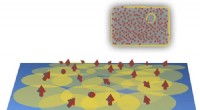
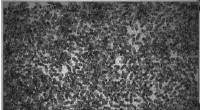
The researchers discovered that the insulator-to-metal transition in VO2 occurs through a non-uniform transformation. Instead of transitioning everywhere at the same time, they found that the metallic phase nucleates at specific "hot spots" and then grows and coalesces to form metallic filaments that eventually span the entire material.
The high-resolution observations enabled the team to link these nucleation events to defects and inhomogeneities in the crystal structure. They also found that the IMT is extremely sensitive to the lattice temperature of the material.
These findings provide crucial insights into the microscopic physics of the insulator-to-metal transition and pave the way for understanding and ultimately controlling this phenomenon on the nanoscale, which will be crucial for the design and development of future electronic devices.