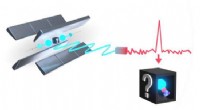
A team of scientists from the National Institute of Standards and Technology (NIST) and the University of Colorado Boulder have shown that quantum infrared spectroscopy can achieve ultra-broadband spectroscopic measurements. This breakthrough could lead to new ways to analyze materials and detect chemicals.
Quantum infrared spectroscopy uses the properties of quantum mechanics to measure the energy levels of molecules. This can provide information about the molecular structure and composition. However, traditional infrared spectroscopy is limited by the bandwidth of the light sources and detectors used. This means that it can only measure a narrow range of frequencies at a time.
The NIST team overcame this limitation by using a quantum cascade laser (QCL). QCLs are semiconductor lasers that can emit light at very high frequencies. This allowed the team to measure a much broader range of frequencies than was previously possible.
The team used their new technique to measure the vibrational spectra of several molecules, including water, carbon dioxide, and methane. They were able to obtain high-resolution spectra that revealed new details about the molecular structure.
This breakthrough could lead to new ways to analyze materials and detect chemicals. For example, it could be used to identify pollutants in the environment or to develop new medical diagnostics.
The team's findings were published in the journal Nature Photonics.
Key Findings:
* Quantum infrared spectroscopy can achieve ultra-broadband spectroscopic measurements.
* This breakthrough could lead to new ways to analyze materials and detect chemicals.
* The NIST team used a quantum cascade laser (QCL) to overcome the limitations of traditional infrared spectroscopy.
* The team was able to obtain high-resolution spectra that revealed new details about the molecular structure.
Future Implications:
* This breakthrough could lead to new ways to analyze materials and detect chemicals.
* For example, it could be used to identify pollutants in the environment or to develop new medical diagnostics.