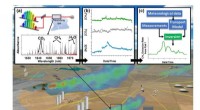
Single-Mode Lasing:
In some cases, one of the supermode resonances in the microcavity becomes dominant and exhibits a lower threshold for stimulated emission compared to other modes. This leads to the preferential amplification and emission of light at the dominant mode's frequency, resulting in single-mode lasing. This behavior can occur when the cavity design and material properties favor a particular mode, or when the pumping conditions selectively excite that mode.
In single-mode lasing, the output emission spectrum shows a narrow peak centered at the dominant mode's wavelength. The laser operates in a single longitudinal mode, providing high spectral purity and coherence.
Dual-Mode Lasing:
Under different conditions, it is possible for two or more supermodes in the microcavity to reach the lasing threshold simultaneously. This leads to dual-mode lasing, where two distinct emission lines appear in the output spectrum. The lasing modes can be closely spaced or separated by a larger wavelength difference depending on the cavity design and material properties.
Dual-mode lasing may occur due to the near-degenerate nature of certain supermodes, where their resonant frequencies are very close. This can result in simultaneous population inversion and stimulated emission in multiple modes. Another factor that can contribute to dual-mode lasing is the presence of multiple gain regions within the microcavity, each supporting a different mode.
In dual-mode lasing, the output emission spectrum exhibits two distinct peaks corresponding to the lasing wavelengths of the two modes. Depending on the specific application, dual-mode lasing can be either undesirable or beneficial. In some cases, it may be necessary to suppress one of the modes to achieve single-mode operation, while in other scenarios, dual-mode lasing can be utilized for specific purposes such as wavelength-division multiplexing or tunable lasers.
The transition between single-mode and dual-mode lasing can be influenced by various factors, such as the cavity geometry, material gain properties, pumping conditions, and the presence of external feedback or interactions. By carefully designing and controlling these parameters, it is possible to achieve the desired lasing behavior in supermode microcavities.