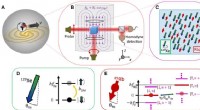
Entangled photons exist in a unique quantum state where their properties, such as polarization or momentum, are correlated in such a way that measuring one photon instantly reveals information about the other, even if separated by vast distances. This phenomenon, known as quantum nonlocality, has been extensively studied and has potential applications in secure communication and high-precision measurements.
The ability to distinguish between two beams of entangled photons has been a long-standing challenge in quantum optics. Conventional methods rely on intricate experimental setups and complex measurements, making it difficult to implement and scale up for practical applications.
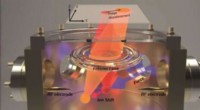
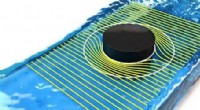
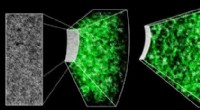
The new approach developed by the team of scientists takes an unconventional route by exploiting the wave nature of light. By interfering the two entangled beams with a specially designed grating, they observed unique interference patterns that allowed them to unequivocally identify each beam as entangled or not.
This novel technique offers several significant advantages over existing methods. It requires minimal experimental modifications, can be easily integrated into existing setups, and does not necessitate complex post-processing of measurement data. Moreover, it can potentially be extended to distinguish between more than two entangled beams, opening up new possibilities for quantum information processing.
The researchers, excited by their discovery, expressed their optimism about its potential impact. By providing a practical and efficient way to distinguish entangled photon beams, this advance could pave the way for the development of more powerful quantum technologies, including quantum computers capable of solving complex problems beyond the reach of classical computers.
In conclusion, the innovative method to distinguish entangled photon beams represents a substantial stride in quantum physics research. Its simplicity, scalability, and potential applications in various quantum technologies make it a highly promising tool for advancing the field of quantum information science.