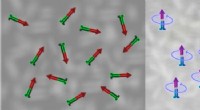
Quantum mechanics is the theory that describes the behavior of matter and energy at the atomic and subatomic levels. In quantum mechanics, particles can exist in multiple states simultaneously, a phenomenon known as superposition. When a quantum particle is measured, it collapses into a single state, which is the state that is observed.
The collapse of the wave function is the process by which a quantum particle transitions from a state of superposition to a single, definite state. This process is not well understood, and it is one of the most fundamental mysteries of quantum mechanics.
Some physicists believe that the collapse of the wave function is caused by the interaction of the quantum particle with the environment. Others believe that the collapse of the wave function is a fundamental property of the universe.
Regardless of the cause of the collapse of the wave function, it is clear that the act of measurement has a profound effect on quantum particles. This effect is one of the reasons why quantum mechanics is so different from classical physics.