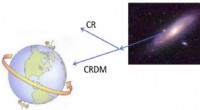
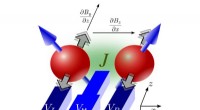
Here's how relativity and other aspects of quantum mechanics contribute to quantum exoticism:
1. Relativistic Quantum Effects: Relativity introduces relativistic effects that modify quantum behaviors, particularly at high speeds or strong gravitational fields. These include phenomena such as time dilation, length contraction, and mass-energy equivalence, which lead to exotic effects like the existence of antimatter, particle-antiparticle annihilation, and the production of massive particles from pure energy.
2. Quantum Entanglement: Quantum entanglement, a fundamental aspect of quantum mechanics, allows particles to become interconnected in a way that their states are correlated, regardless of the distance between them. This non-local connection exhibits exotic features, such as the instantaneous collapse of the wave function when one entangled particle is measured, affecting the state of its distant counterpart.
3. Superposition and Quantum Tunneling: Quantum superposition, where particles can exist in multiple states simultaneously, and quantum tunneling, where particles can pass through potential barriers without possessing the necessary energy, are inherent quantum features that lead to exotic phenomena. Superposition enables quantum bits (qubits) to represent multiple values concurrently in quantum computing, while tunneling allows particles to overcome seemingly impossible obstacles in certain situations.
4. Quantum Uncertainty Principle: The Heisenberg uncertainty principle, which sets inherent limits on the precision with which certain pairs of physical properties (like position and momentum) can be simultaneously measured, gives rise to exotic consequences. This uncertainty principle is responsible for the probabilistic nature of quantum mechanics and the unpredictable behaviors of particles at the quantum level.
5. Wave-Particle Duality: The dual nature of matter, where particles exhibit both wave-like and particle-like behavior, leads to exotic phenomena such as interference, diffraction, and the ability of a single particle to be in multiple places at once. This duality is a defining characteristic of quantum mechanics that sets it apart from classical physics.
While relativity contributes to quantum exoticism through relativistic effects and phenomena, it is important to recognize that quantum mechanics itself, with its inherent principles and mathematical formalism, is the primary source of the exotic and counterintuitive behaviors observed in the quantum realm.