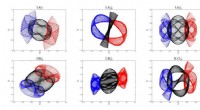
In weightlessness, liquids behave differently than they do on Earth. This is because there is no gravity to pull the liquids down, so they can float freely in space.
When two liquids of different densities are mixed in weightlessness, they will form layers. The denser liquid will sink to the bottom, and the less dense liquid will rise to the top. This is because the denser liquid has more mass, so it exerts more force on the less dense liquid.
The layers of liquid will be separated by a thin boundary layer. This boundary layer is made up of a mixture of the two liquids, and it is constantly changing as the liquids diffuse into each other.
The rate at which the liquids diffuse into each other depends on the temperature of the liquids and the difference in their densities. The higher the temperature, the faster the liquids will diffuse into each other. The greater the difference in densities, the slower the liquids will diffuse into each other.
The behavior of liquids in weightlessness is important for understanding a number of phenomena in space, such as the formation of clouds and the flow of fluids in the human body.
Examples of how liquids of different densities behave in weightlessness
* Oil and water: When oil and water are mixed in weightlessness, they will form layers. The oil will rise to the top, and the water will sink to the bottom.
* Milk and chocolate syrup: When milk and chocolate syrup are mixed in weightlessness, they will form layers. The chocolate syrup will sink to the bottom, and the milk will rise to the top.
* Blood: Blood is a mixture of plasma, red blood cells, white blood cells, and platelets. In weightlessness, the red blood cells will sink to the bottom, the white blood cells and platelets will rise to the top, and the plasma will be in the middle.
Applications of the behavior of liquids in weightlessness
The behavior of liquids in weightlessness has a number of applications in space, such as:
* The design of fluid handling systems: The behavior of liquids in weightlessness must be taken into account when designing fluid handling systems for spacecraft. This is because the liquids in these systems will not behave the same way as they do on Earth.
* The study of fluid dynamics: The behavior of liquids in weightlessness can be used to study fluid dynamics in a unique way. This is because there is no gravity to interfere with the flow of liquids in weightlessness.
* The development of new materials: The behavior of liquids in weightlessness can be used to develop new materials that can be used in space. This is because the liquids in these materials will not be affected by gravity, so they can be processed in a different way.
The behavior of liquids in weightlessness is a complex and fascinating topic that has important implications for a number of fields of science and engineering.