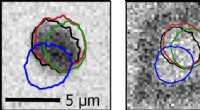
The research team, led by scientists from the Massachusetts Institute of Technology (MIT), conducted experiments using gallium-based liquid metal droplets. By precisely controlling the size of the droplets and measuring their solidification time, they observed that smaller droplets solidified at significantly slower rates compared to larger droplets. This behavior was attributed to the surface effects that become more prominent as the droplet size decreases.
In smaller droplets, the ratio of surface area to volume increases, leading to a higher surface energy. This excess energy acts as a barrier, hindering the nucleation and growth of crystalline structures within the droplet. As a result, the liquid state is more stable, and the solidification process is delayed.
The researchers also found that the solidification behavior of the droplets is influenced by the cooling rate. Under rapid cooling conditions, the droplets tend to form a glassy state, lacking the long-range order of crystals. This is because the rapid cooling prevents the atoms from rearranging into ordered structures, resulting in a frozen liquid state.
On the other hand, slower cooling rates allow the droplets sufficient time to overcome the surface energy barrier and nucleate crystalline structures. This leads to the formation of a polycrystalline structure, characterized by the presence of multiple small crystals within the solidified droplet.
The findings from this study provide valuable insights into the size-dependent solidification behavior of materials. By understanding and controlling these effects, scientists can tailor the properties and structures of materials at the nanoscale, opening up new avenues for material design and advanced functional materials.