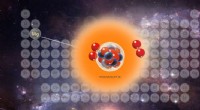
Nuclear fusion is a process that combines two atoms into one, releasing a large amount of energy. This energy can be used to generate electricity, or it can be used to propel a spacecraft.
Fusion propulsion is still in its early stages of development, but it has the potential to be a very efficient and powerful form of propulsion. It is estimated that a fusion-powered spacecraft could travel to Mars in just a few months, compared to the nine months it takes a conventional spacecraft.
There are a number of different ways to design a fusion propulsion system, but the most common approach is to use a magnetic confinement device. In a magnetic confinement device, plasma (a hot, ionized gas) is held in place by a powerful magnetic field. The plasma is then heated to extremely high temperatures, causing the atoms to fuse together and release energy.
The energy released by fusion can be used to generate electricity, or it can be used to heat a propellant gas. The heated propellant gas is then expelled from the spacecraft, providing thrust.
Fusion propulsion is a very promising technology, but there are still a number of challenges that need to be overcome before it can be used to power spacecraft. One challenge is that it is very difficult to create and maintain the extreme temperatures and pressures that are needed for fusion to occur. Another challenge is that the materials used in a fusion propulsion system must be able to withstand the harsh environment of space.
Despite these challenges, fusion propulsion is a very promising technology with the potential to revolutionize space travel.
Advantages of Fusion Propulsion
Fusion propulsion has a number of advantages over conventional forms of propulsion, including:
* High efficiency: Fusion propulsion is very efficient, meaning that it can produce a lot of thrust with a relatively small amount of fuel.
* High power: Fusion propulsion can produce a lot of power, making it possible to travel to distant planets and moons in a relatively short amount of time.
* Low emissions: Fusion propulsion does not produce any emissions, making it a very environmentally friendly form of propulsion.
Disadvantages of Fusion Propulsion
Fusion propulsion also has a number of disadvantages, including:
* High cost: Fusion propulsion systems are very expensive to build and maintain.
* Complex technology: Fusion propulsion is a very complex technology, and it can be difficult to design and build a fusion propulsion system that is safe and reliable.
* High temperatures and pressures: Fusion propulsion requires extremely high temperatures and pressures, which can be difficult to create and maintain.
Challenges of Fusion Propulsion
There are a number of challenges that need to be overcome before fusion propulsion can be used to power spacecraft. These challenges include:
* Creating and maintaining extreme temperatures and pressures: Fusion propulsion requires extremely high temperatures and pressures, which can be difficult to create and maintain.
* Developing materials that can withstand the harsh environment of space: The materials used in a fusion propulsion system must be able to withstand the harsh environment of space, including high temperatures, radiation, and micrometeoroids.
* Designing and building a safe and reliable fusion propulsion system: Fusion propulsion is a very complex technology, and it can be difficult to design and build a fusion propulsion system that is safe and reliable.
Despite these challenges, fusion propulsion is a very promising technology with the potential to revolutionize space travel.