Neutrinos are among the most mysterious particles in the universe. They have no electric charge, and they have very small masses. Neutrinos are also very difficult to detect, because they interact with other matter only very weakly.
DUNE will use a variety of techniques to detect neutrinos. One technique is to use the liquid argon detector to look for scintillation light. When a neutrino interacts with an atom of argon, it can create a flash of light. These flashes of light can be detected by photomultiplier tubes located inside the detector.
Another technique that DUNE will use is to look for changes in the electric field inside the detector. When a neutrino interacts with an atom of argon, it can create an electric charge. These charges can be detected by electrodes located inside the detector.
DUNE will be the most sensitive neutrino detector ever built. It will allow scientists to study neutrinos in unprecedented detail, and it may even help to answer some of the biggest mysteries about the universe.
Here is a more detailed explanation of how DUNE will work:
* The neutrino beam: DUNE will use a beam of neutrinos that is produced by the Fermi National Accelerator Laboratory (Fermilab) in Illinois, USA. The neutrino beam will travel underground for approximately 1,300 kilometers (800 miles) to the SURF.
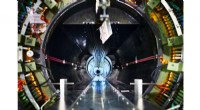
* The liquid argon detector: The DUNE detector will be filled with approximately 70,000 tons of liquid argon. The liquid argon will be contained in a massive underground tank that is approximately 1,200 meters (3,900 feet) long, 100 meters (330 feet) wide, and 20 meters (66 feet) high.
* The photomultiplier tubes: The photomultiplier tubes will be located inside the detector. They will be used to detect the flashes of scintillation light that are produced when neutrinos interact with atoms of argon.
* The electrodes: The electrodes will also be located inside the detector. They will be used to detect the changes in the electric field that are produced when neutrinos interact with atoms of argon.
DUNE is a complex and ambitious project, but it has the potential to make major contributions to our understanding of the universe. The experiment is scheduled to begin operations in 2029.