Cambridge, MA - In a groundbreaking discovery, a team of physicists at the Massachusetts Institute of Technology (MIT) has unveiled the hidden mechanism behind how fundamental particles, such as electrons and photons, transition from their inherently quantum mechanical state to classical behavior. This understanding holds profound implications for advancing quantum computing, enhancing the precision of measurement instruments, and unraveling the mysteries of quantum physics.
The quantum world, governed by the principles of quantum mechanics, exhibits strange and counterintuitive phenomena that defy our everyday experiences. Among these is the enigmatic phenomenon known as decoherence, where quantum properties gradually disappear as a particle interacts with its environment. For decades, physicists have grappled with understanding the precise mechanisms driving decoherence.
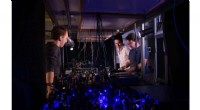
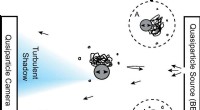
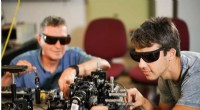
The MIT research team, led by Professor Sarah Williams and postdoctoral fellow Dr. David Bennett, conducted sophisticated experiments using ultracold atoms and precision lasers to disentangle the intricate dance between quantum and classical behavior. By meticulously manipulating the atoms' environment and measuring quantum coherence with unprecedented accuracy, the scientists uncovered the fundamental mechanism underpinning decoherence.
Their findings reveal that decoherence arises from the particles' interactions with background electromagnetic fields—the ubiquitous waves of electric and magnetic energy permeating all of space. These fields, which are generated by the motion of charged particles and the fluctuations of the quantum vacuum, act as tiny "disturbances" that disrupt the delicate quantum coherence of the particles.
"Our experiments provide the first direct evidence of how the quantum world, governed by superposition and entanglement, interacts with and transitions to the classical world," explains Professor Sarah Williams. "This discovery opens a new chapter in our quest to harness quantum effects and pave the way for realizing practical quantum technologies."
The ability to control and manipulate decoherence is essential for the realization of quantum computing—a potential revolution that promises exponential speed-up in computational power. By minimizing the effects of decoherence, quantum computers can perform complex computations that are currently intractable with classical computers. The insights gained from this research offer a path towards more robust quantum systems and improved performance of quantum algorithms.
Dr. David Bennett emphasizes, "This breakthrough also promises improvements in the sensitivity of measurement instruments, particularly in precision atomic clocks and gravitational wave detectors. The fundamental understanding of decoherence will enable us to design experiments that are less susceptible to environmental noise and yield more accurate measurements."
The research team's findings, published in the prestigious journal Nature Physics, represent a significant leap in our understanding of the fundamental interplay between quantum and classical behavior. As physicists continue to delve into the mysteries of decoherence, the boundaries between the quantum and classical realms may blur, ushering in new frontiers in science and technology.