In a groundbreaking study, a team of researchers from the Massachusetts Institute of Technology (MIT) has uncovered surprising new insights into the behavior of strontium ions within lithium-ion batteries. Their findings challenge conventional understanding and open up exciting possibilities for improving battery performance.
Strontium, an alkaline earth metal, has been previously overlooked for use in batteries due to its high melting point and sluggish diffusion. However, the MIT team discovered that under certain conditions, strontium can exhibit remarkable mobility, enabling it to move rapidly through the battery's electrolyte and effectively contribute to the electrochemical reactions.
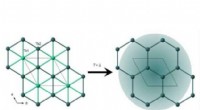
Using advanced experimental techniques combined with computational modeling, the researchers observed that strontium ions form a unique cluster structure within the electrolyte. These clusters act as "superionic conductors," allowing strontium to transport ions at an exceptionally high rate, comparable to that of commonly used lithium ions.
This unexpected behavior has significant implications for battery technology. By incorporating strontium into battery designs, researchers may now be able to overcome some of the limitations associated with conventional lithium-ion batteries. For instance, strontium's fast mobility could enable faster charging and longer battery life, addressing critical challenges in the development of electric vehicles and portable electronics.
Furthermore, the discovery challenges traditional assumptions about the behavior of ions in batteries, paving the way for the exploration of other unconventional materials and architectures for energy storage devices.
The MIT team's findings, published in the renowned journal Nature Materials, represent a significant breakthrough in the field of battery research and hold great promise for the advancement of energy technologies.