Quantum mechanics, which revolutionized our comprehension of the subatomic realm, describes phenomena on the level of atoms, subatomic particles, and molecules. It introduces concepts such as wave-particle duality, superposition, and quantum entanglement, which are essential for explaining the behavior of the tiniest constituents of matter.
Previously, it was believed that quantum effects become insignificant for macroscopic objects, such as those we can see and touch in everyday life. However, the recent experiment conducted by the research team pushed the boundaries of quantum mechanics by manipulating the motion of a tiny, but visible object–a glass bead about 100 nanometers in diameter (a nanometer is one billionth of a meter).
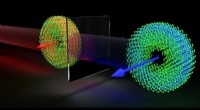
The physicists harnessed the power of quantum entanglement to couple the motion of the glass bead with that of a single atom. By doing so, they essentially linked the quantum properties of the atom to the movement of the bead, enabling them to study how quantum effects influence the behavior of a larger system.
Their measurements revealed clear signatures of quantum behavior in the motion of the bead, highlighting the surprising reach of quantum mechanics into the realm of the macroscopic. Specifically, they observed that the momentum and position of the bead were related in a quantum mechanical way, showcasing a characteristic feature of quantum systems.
This experimental proof shatters the preconception that quantum mechanics is confined to the microscopic scale and paves the way for exciting new research directions. It brings the principles of quantum physics into the realm of everyday objects, potentially guiding the development of future technologies and deepening our understanding of the fundamental laws governing the universe.
The findings hold particular promise for advancing the fields of quantum information processing and sensing. By leveraging the quantum properties of macroscopic systems, scientists could develop more efficient quantum computers, ultrasensitive detectors, and improved imaging technologies with unprecedented precision.
Although the demonstration pertains to a specific experimental setup, the implications of these results extend far beyond the tiny glass bead. They challenge long-held notions and push the boundaries of quantum theory. As physicists delve deeper into this captivating interplay of quantum mechanics and the macroscopic world, we can expect further revelations that reshape our understanding of the fascinating quantum realm and its impact on our everyday lives.