1. Initial State: Imagine a material in its normal, non-superconducting state. electrons behave as independent particles, colliding randomly, and experience resistance when moving through the material.
2. Radiation Bombardment: High-energy radiation, such as neutrons, positrons, or other particles, is directed at the material. This radiation collides with atoms within the material, knocking atoms out of their original positions and creating defects called "vacancies."
3. Formation of Cooper Pairs: The defects caused by radiation bombardment alter the electronic structure of the material. Some electrons become paired with opposite spins to form "Cooper pairs." These pairs are crucial for facilitating superconductivity.
4. Reduced Resistance: Cooper pairs can move through the material without colliding with defects in the lattice. This reduction in resistance allows electrons to flow more freely and efficiently.
5. Electron Attraction: Within a certain distance, the presence of a vacancy can alter the interactions between electrons. This altered interaction can lead to the attraction between nearby electrons, forming Cooper pairs.
6. Transition to Superconductivity: As more and more Cooper pairs form, the material begins to transition to a superconducting state. The resistance to electrical flow decreases until it eventually reaches zero, allowing for the flow of electricity without energy loss.
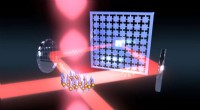
Visualizing this process helps illustrate how radiation bombardment leads to the phenomenon of superconductivity by creating defects that facilitate the formation and movement of Cooper pairs, ultimately reducing electrical resistance.