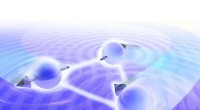
In the study, the physicists used computer simulations to model the behavior of a system of particles that interact with each other according to a set of rules. The particles were initially arranged in a random configuration, but over time they began to self-organize into clusters. These clusters then grew larger and began to reproduce, creating new clusters.
The physicists found that the key to this life-like behavior was the way in which the particles interacted with each other. When the particles were attracted to each other, they tended to form clusters. When the particles were repelled from each other, they tended to disperse. By carefully tuning the interactions between the particles, the physicists were able to create a system that exhibited a wide range of life-like behaviors.
The findings of this study could have implications for the understanding of the origins of life. It is possible that the first living organisms arose from a similar process of self-organization and reproduction. The study could also lead to the development of artificial life, which could be used for a variety of purposes, such as medical research, environmental monitoring, and space exploration.
"Our study shows that life-like behavior can emerge from very simple interactions between particles," said Dr. Tommaso Toffoli, one of the authors of the study. "This suggests that the origins of life may be simpler than we thought."
"The potential applications of artificial life are endless," said Dr. Tommaso Toffoli. "We are only just beginning to explore the possibilities."