"Humans and other animals synchronize with rhythmic events in their environment. However, the brain mechanisms underlying this ability remain poorly understood," says lead author Charles Schroeder, associate professor in New York University's Center for Neural Science and Department of Psychology. "Our model offers insights into how the brain achieves both beat-based synchronization and flexible adjustments to tempo changes in the environment."
Schroeder and his team's mathematical model focuses on the role of the basal ganglia, a brain structure involved in motor control and learning. The scientists combined their mathematical analysis with behavioral data from an earlier study to provide experimental support for their model's predictions.
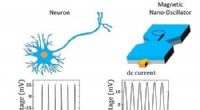
The model suggests the brain has two coupled neural populations: one representing regular, beat-based timing (a metronome-type mechanism), and the other, an adjustable neural oscillator which allows the brain to flexibly adapt its internal rhythm to external rhythm changes.
The model's experimental validation came through a musical task performed by human subjects. Participants listened to a series of tones whose rhythm gradually increased or decreased in speed, and they tapped their fingers to the beat. Researchers measured the participants' tapping accuracy and found it closely aligned with the predictions of the model--individuals were initially delayed relative to the actual beat, but eventually adapted and tapped accurately as the tempo changed.
"A striking finding was that people tended to synchronize with the expected rather than the actual beat during transitions in tempo," observes Schroeder. "This suggests the brain actively predicts the future location of the beat, as opposed to simply reacting to it."
The authors say that their model--the first mathematical description of the coupled neural populations thought to underlie beat-based synchronization--has the potential to help explain a broad range of behaviors, from dancing and music to social coordination and language processing.
"We believe the dual oscillator architecture will provide insights into how neural processes align and adapt to rhythmic sensory input, which is crucial for understanding a range of cognitive functions," says Schroeder.