New 3D images of shark intestines have revealed that they function in a similar way to Nikola Tesla's valve, a mechanical device that allows fluid to flow in one direction but not the other. The discovery could lead to new designs for medical devices and other applications.
Shark intestines are lined with a series of spiral folds that create a one-way valve. When food enters the intestine, it is pushed forward by the peristaltic contractions of the gut wall. The folds prevent food from moving backward, and they also help to mix and churn the food, aiding in digestion.
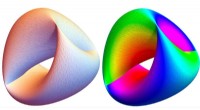
The researchers used micro-computed tomography (micro-CT) scanning to create 3D images of the shark intestines. The images showed that the folds are arranged in a helical pattern, and that they are interconnected by a series of small channels. This design allows food to flow through the intestine in one direction, but it prevents it from moving backward.
The researchers believe that the shark intestine's design could be used to develop new medical devices, such as valves for catheters and other surgical instruments. The design could also be used in other applications, such as fluid control systems and microfluidic devices.
"The shark intestine is a fascinating example of natural engineering," said study lead author Dr. Adam Summers of the University of California, Berkeley. "We are excited about the potential applications of this design in medicine and other fields."
The study was published in the journal Nature Communications.