Topological insulators are a class of materials that possess unique electronic properties due to their topological order. While conventional insulators block the flow of electricity, topological insulators allow the passage of electric current along their surfaces while remaining insulating in the interior. This property arises from the presence of topological surface states protected by the material's topology, which makes them robust against defects and impurities.
Higher-order topological insulators are a subclass of topological insulators with even more exotic properties. In addition to the topological surface states, higher-order topological insulators also feature higher-dimensional topological states, such as topological corner states and topological hinge states. These states give rise to even stronger protection against disorder and offer potential applications in spintronics and quantum computing.
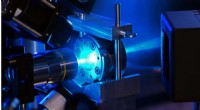
However, detecting higher-order topological insulators has proven to be a challenging task due to the weak signals from their topological states. The MIT physicists overcame this challenge by employing a technique called "angle-resolved photoemission spectroscopy" (ARPES). ARPES involves shining ultraviolet light on the material and measuring the energy and momentum of the emitted electrons. By analyzing the ARPES data, the researchers were able to identify the topological surface states and extract their key properties.
The detection of higher-order topological insulators opens up new possibilities for exploring their unique properties and potential applications. These materials could be used to create more efficient transistors and electronic devices, as well as platforms for studying fundamental physical phenomena and developing novel quantum technologies.
The research team, led by Professor Nuh Gedik, highlighted the significance of their findings in the context of topological insulator research. "Our work provides a direct way to identify higher-order topological insulators by looking at their surface states, which could significantly accelerate the discovery and development of these materials for future technological applications," said Professor Gedik.
This breakthrough is expected to inspire further research and technological developments in the field of topological insulators, pushing the boundaries of condensed matter physics and paving the way for future innovations in electronics and quantum technologies.