Water, the most abundant substance on Earth, exhibits several anomalous behaviors compared to other liquids. One of its most intriguing characteristics is its high specific heat capacity, which means that it takes a lot of energy to raise its temperature. This property is crucial for regulating the Earth's climate, as it helps moderate temperature fluctuations.
However, the underlying mechanisms behind water's exceptional thermal properties have remained a subject of intense scientific scrutiny. In the new study, the research team used a combination of advanced experimental techniques and theoretical simulations to investigate how water's dynamics are affected at low temperatures.
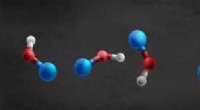
Their experiments revealed a striking change in the behavior of water as the temperature is decreased. At high temperatures, water molecules move freely and rotate rapidly. However, as the temperature drops, the rotational motion of the molecules slows down, leading to the formation of transient, cage-like structures of hydrogen-bonded water molecules.
These cages effectively trap water molecules, hindering their movement and slowing down the overall water dynamics. This phenomenon, referred to as "cage confinement," is the key factor responsible for water's reduced thermal conductivity at low temperatures.
The study also unveiled a fascinating connection between the rotational dynamics of water molecules and the structural rearrangements that occur as temperature decreases. The researchers found that the rate of structural relaxation in water is directly linked to the timescale of molecular rotations.
This finding suggests that the rotational dynamics of water molecules act as a "molecular clock" that governs the structural rearrangements in the liquid. This coupling between rotational dynamics and structural relaxation could have far-reaching implications for understanding the behavior of water in various physical and biological systems.
In conclusion, the new study provides a detailed understanding of how water's dynamics slow down at low temperatures. The formation of transient cages, known as "cage confinement," restricts the movement of water molecules and reduces the liquid's thermal conductivity. Furthermore, the study reveals a direct connection between rotational dynamics and structural relaxation in water, which highlights the importance of molecular rotations in shaping the liquid's properties. These findings contribute to our knowledge of water's unique behavior and have implications for fields ranging from atmospheric science to materials science and biology.