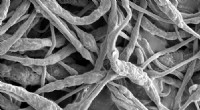
In the case of gecko tape, the adhesive surface is made up of millions of tiny, hair-like structures called setae. These setae are made of a flexible material called keratin, the same protein found in human hair and nails.
Each seta is further divided into hundreds of even smaller spatulae or branched tips. These spatulae increase the surface area of the tape, maximizing the contact between the tape and the surface it is attached to.
When the setae of the gecko tape come into close contact with a surface, the Van der Waals forces between the molecules of the setae and the molecules of the surface become significant. These forces create a strong adhesive bond, allowing the tape to stick to a wide range of surfaces, including glass, metal, plastic, and even rough or dusty surfaces.
Unlike traditional adhesives that rely on chemical bonding or mechanical interlocking, gecko tape utilizes physical forces that do not cause any damage or leave any residue on the surface. The adhesive strength of the tape can be controlled by varying the density and size of the setae, allowing for different levels of adhesion.
Gecko tape has found applications in various fields, including robotics, medical devices, industrial assembly, and consumer products. Its unique adhesive mechanism inspired the development of other adhesive technologies that mimic gecko feet, leading to advancements in fields such as biomimicry and materials science.