This theory helps to explain why waves can carry information from our surroundings. When a wave interacts with matter, it transfers some of its energy to the matter. This energy transfer can cause the matter to vibrate or move, which can then be detected by our senses. For example, when we hear a sound, the sound waves are causing our eardrums to vibrate. Our brains then interpret this vibration as sound.
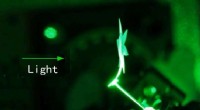
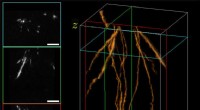
Scientists have been studying wave-particle duality for over a century and have conducted numerous experiments to support the theory. One of the most famous experiments is the double-slit experiment. In this experiment, a beam of light is passed through two slits in a screen. If light were a pure wave, we would expect to see a single bright spot on the screen behind the slits. However, what we actually see is a series of bright and dark bands. This pattern can be explained by wave-particle duality. The bright bands correspond to places where the waves from the two slits interfere constructively, while dark bands correspond to places where they interfere destructively. In recent years, this theory has been experimentally tested even in biological tissues with promising results for medical fields as it paves the road to the ability of generating biological imagery at unprecedented spatial resolution and penetration depth via a non-invasive method.
Scientists studying wave-particle duality believe that there are a number of ways that waves carry information from our surroundings. The most studied wave is the electromagnetic wave. This wave carries all of the information and the spectrum ranges from the infrared through visible light (including all the colours of the rainbow) and ending with ultraviolet light. Besides biological samples are made up of a complex arrangement of biological structures (from molecules all the way to entire cells in an organ) having different spatial sizes. As mentioned before electromagnetic waves have finite wavelengths meaning that these wave can only resolve and carry information of objects having similar or bigger size scales as its wavelength. This leads to an inherent problem, the longer the wavelenght the lower the resolution or amount of information encoded in this given wave type.
Wave-particle duality is a revolutionary approach to the way we think about light, particles, and the interaction between them. This new understanding of the intricate phenomena around us has not only deepened our knowledge of fundamental physics but has paved the way for breakthrough technological advancements ranging from ultra-high resolution imaging techniques to efficient energy production with potential breakthroughs still beyond the horizon that would further redefine our world and shape future scientific landscapes.