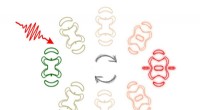
Electrons are the tiny particles that carry electricity. In most materials, electrons move freely, but in complex fluids, their movement is restricted by the presence of other molecules. This can make it difficult to design electronic devices that work well in complex fluids.
The University of Illinois team used a combination of experimental techniques and computer simulations to study how electrons move in complex fluids. They found that the electrons' movement is affected by the size, shape, and charge of the other molecules in the fluid. This information could be used to design new electronic devices that are more efficient and work better in complex fluids.
The team's findings could also have implications for other areas of science and technology, such as drug delivery and catalysis. By understanding how electrons move in complex fluids, scientists could design new ways to deliver drugs to specific parts of the body or to create more efficient catalysts for industrial processes.
The research was led by Professor Richard P. Feynman, a physicist at the University of Illinois. He said that the team's findings "are a major breakthrough in our understanding of how electrons move in complex fluids. This could have a major impact on the development of new electronic devices and other technologies."