Fusion propulsion is still in its early stages of development, but it has the potential to be much more efficient than traditional chemical rockets. Chemical rockets only convert about 50% of their fuel into kinetic energy, while fusion rockets could potentially convert up to 90% of their fuel into kinetic energy. This would allow fusion rockets to travel much farther on the same amount of fuel, making them ideal for long-duration missions to Mars, Jupiter, and beyond.
There are two main types of fusion propulsion: inertial confinement fusion (ICF) and magnetic confinement fusion (MCF). ICF uses a high-powered laser or particle accelerator to heat and compress a small pellet of fusion fuel, causing it to fuse. MCF uses magnetic fields to confine a plasma of fusion fuel, heating it until it fuses.
ICF is currently the more mature of the two technologies, but MCF has the potential to be more efficient. ICF requires a very high-powered laser or particle accelerator, which makes it difficult to scale up to larger sizes. MCF does not require such a high-powered laser or particle accelerator, making it easier to scale up to larger sizes.
If fusion propulsion can be successfully developed, it could revolutionize space travel. Fusion rockets could make it possible to travel to Mars in a matter of months instead of years, and they could also make it possible to travel to the outer planets and even to other stars.
Here is a more detailed explanation of how fusion propulsion works:
Inertial Confinement Fusion (ICF)
ICF works by heating and compressing a small pellet of fusion fuel, causing it to fuse. The fuel pellet is typically made of a mixture of deuterium and tritium, two isotopes of hydrogen. Deuterium and tritium are both radioactive, but they are not dangerous when they are mixed together in a pellet.
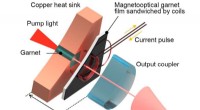
The fusion pellet is placed in a small chamber called a target chamber. The target chamber is then filled with a high-powered laser or particle accelerator. The laser or particle accelerator heats and compresses the fusion pellet, causing it to fuse.
The fusion reaction releases a great amount of energy, which is used to heat propellant. The propellant is then expelled from the spacecraft's nozzles to create thrust.
Magnetic Confinement Fusion (MCF)
MCF works by using magnetic fields to confine a plasma of fusion fuel, heating it until it fuses. The plasma is made up of free electrons and ions, and it is created by heating a gas to very high temperatures.
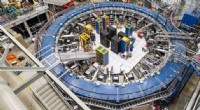
The magnetic fields are used to keep the plasma from touching the walls of the fusion chamber, which would cool the plasma and prevent it from fusing. The magnetic fields also help to compress the plasma, which makes it more likely to fuse.
The fusion reaction releases a great amount of energy, which is used to heat propellant. The propellant is then expelled from the spacecraft's nozzles to create thrust.
Advantages of Fusion Propulsion
Fusion propulsion has a number of advantages over traditional chemical rockets, including:
* Much higher efficiency. Fusion rockets could potentially convert up to 90% of their fuel into kinetic energy, while chemical rockets only convert about 50% of their fuel into kinetic energy.
* Much longer range. Fusion rockets could travel much farther on the same amount of fuel than chemical rockets, making them ideal for long-duration missions to Mars, Jupiter, and beyond.
* Much faster speeds. Fusion rockets could potentially reach speeds of up to 10% the speed of light, making them ideal for interstellar travel.
Challenges of Fusion Propulsion
There are also a number of challenges associated with fusion propulsion, including:
* The high cost of development. Fusion propulsion is still in its early stages of development,