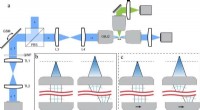
1. Laser Generation:
Laser weapons start by generating a high-powered laser beam. Various methods can be used to achieve this:
- Gas Lasers: Gas lasers use gases like carbon dioxide or hydrogen fluoride to produce laser beams.
- Solid-State Lasers: Solid-state lasers employ solid materials such as crystals (e.g., neodymium-doped yttrium aluminum garnet, or Nd:YAG) or semiconductors (e.g., gallium arsenide) to generate laser light.
- Fiber Lasers: Fiber lasers utilize optical fibers doped with rare-earth elements to amplify the laser beam.
- Free-Electron Lasers: These lasers use high-energy electron beams passing through magnetic fields to generate laser light.
2. Beam Propagation:
Once generated, the laser beam is amplified and shaped to achieve the desired energy and intensity. It's then directed towards the target using mirrors, lenses, or other optical components. For long-distance applications, beam propagation through the atmosphere needs careful consideration due to factors like absorption and scattering.
3. Target Engagement:
Laser weapons achieve target engagement by focusing the high-energy beam onto the target with extreme precision. The laser beam can have various effects on the target, depending on its power and duration:
- Ablation: High-intensity laser beams can instantly vaporize a portion of the target's surface.
- Thermal Damage: The laser energy heats the target, causing structural damage or potentially igniting flammable materials.
- Structural Deformation: Continuous exposure to the laser beam can cause the target to melt or experience structural deformation, leading to failure.
4. Tracking and Stabilization:
Laser weapons require sophisticated tracking and stabilization mechanisms to ensure the beam remains focused on the target despite vibrations, platform movements, or atmospheric turbulence. This is especially crucial for long-range engagements.
5. Power Requirements:
Laser weapons consume significant amounts of power. Achieving high laser output requires substantial energy sources, such as electric generators, batteries, or even nuclear power sources for larger systems.
6. Cooling Systems:
The high energy involved in laser weapon systems generates considerable heat. Efficient cooling systems are essential to prevent overheating of laser components and ensure reliable operation.
Challenges and Developments:
While the basic principles of laser weapon technology are well-established, several challenges remain in developing practical and effective systems, including:
- High Power Density: Achieving a compact and efficient laser system with sufficient power density remains a key technical hurdle.
- Beam Quality and Propagation: Maintaining beam quality and minimizing distortions during propagation through the atmosphere is critical.
- Countermeasures: Potential adversaries may develop countermeasures to disrupt or deflect the laser beam.
Despite these challenges, significant advancements have been made, and laser weapon systems are actively being tested and developed by various militaries and research organizations worldwide. As technology continues to evolve, laser weapons hold the potential to revolutionize modern warfare, enabling precise, non-explosive engagements at extended ranges.