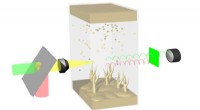
When the welding horn contacts the parts, it causes them to vibrate at the ultrasonic frequency. This vibration creates friction between the parts, which generates heat. The heat melts the plastic at the interface between the parts, causing them to bond together.
Ultrasonic welding is a very fast and efficient joining method. It can be used to weld parts of different shapes and sizes, and it does not require any adhesives or solvents. However, ultrasonic welding can only be used with thermoplastic materials.
Here are the steps involved in ultrasonic welding:
1. The parts to be welded are placed in a welding fixture.
2. The welding horn contacts the parts and begins to vibrate at the ultrasonic frequency.
3. The vibration creates friction between the parts, which generates heat.
4. The heat melts the plastic at the interface between the parts, causing them to bond together.
5. The welding horn is removed, and the parts are allowed to cool and solidify.
Ultrasonic welding is used in a variety of industries, including automotive, medical, and consumer electronics. It is a versatile and efficient joining method that can be used to produce strong and durable bonds between plastic parts.
Here are some of the advantages of ultrasonic welding:
* Fast and efficient: Ultrasonic welding can be used to weld parts in a matter of seconds.
* Strong and durable bonds: Ultrasonic welding produces strong and durable bonds between plastic parts.
* No adhesives or solvents: Ultrasonic welding does not require any adhesives or solvents, which can reduce costs and improve safety.
* Versatile: Ultrasonic welding can be used to weld parts of different shapes and sizes.
* Quiet: Ultrasonic welding is a quiet process, which can be important in noise-sensitive environments.
Here are some of the disadvantages of ultrasonic welding:
* Limited to thermoplastic materials: Ultrasonic welding can only be used with thermoplastic materials.
* Can damage delicate parts: Ultrasonic welding can damage delicate parts if the welding parameters are not set correctly.
* Expensive equipment: Ultrasonic welding equipment can be expensive, which can be a barrier to entry for some manufacturers.