An atomic clock is a highly precise clock that uses the natural vibrations of atoms, specifically cesium-133 atoms, as a reference for measuring time. It operates based on the principle of atomic resonance.
Working principle of an atomic clock:
1. Cesium Atoms:
Atomic clocks use the transition frequency of the cesium-133 atom. Cesium atoms are chosen because they exhibit very stable and precise frequency oscillations.
2. Microwave Radiation:
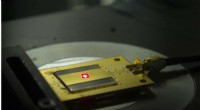
The clock apparatus includes a microwave cavity containing cesium atoms. Microwaves of specific frequencies are passed through the cavity.
3. Atomic Resonance:
When the frequency of the microwaves matches the natural resonant frequency of cesium-133 atoms (about 9,192,631,770 cycles per second), the atoms absorb energy and transition from a lower energy state to a higher energy state.
4. Frequency Measurement:
The frequency of the microwave radiation that causes this transition is precisely measured using electronic circuits and is compared with the reference frequency.
5. Frequency Standards:
The International System of Units (SI) defines one second as the duration of 9,192,631,770 cycles of this particular cesium-133 transition. This established standard ensures that atomic clocks keep exceptionally precise time.
6. Atomic Clock Synchronization:
Atomic clocks can be synchronized with each other through signals transmitted via various methods, including GPS (Global Positioning System) satellites or specialized communication networks.
The remarkable precision of atomic clocks has made them crucial in scientific research, navigation, communication systems, and other applications where accurate timekeeping is essential.