An atom is made of tiny particles called electrons that orbit a nucleus. The nucleus is made up of particles called protons and neutrons. Atom smashers, also called particle accelerators, are designed to accelerate these subatomic particles to incredibly high speeds and then collide them with each other. This allows us to study the particles in detail and to understand more about the fundamental forces of nature.
How Do Atom Smashers Work?
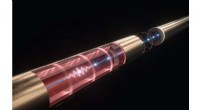
Atom smashers use strong electric and magnetic fields to accelerate and control particles. These fields are created by powerful magnets and radio waves. The magnets bend the path of charged particles, while the radio waves accelerate them.
The particles are accelerated in a circular or linear path. In circular accelerators, the particles are kept in a circular path by the strong magnetic fields. In linear accelerators, the particles are accelerated in a straight line by a series of radio waves.
The particles reach extremely high speeds in the accelerator. When the particles reach the desired energy, they are then collided with a target, such as a stationary target or another beam of particles.
The Large Hadron Collider
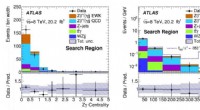
The Large Hadron Collider (LHC) is the largest and most powerful atom smasher in the world. It is located at the European Organization for Nuclear Research (CERN) in Switzerland. The LHC was built to accelerate protons to energies of 13 teraelectronvolts (TeV), which is equivalent to the energy of two speeding passenger jets colliding head-on.
The LHC is used to study the fundamental particles of matter and to search for new phenomena, such as dark matter and extra dimensions. The LHC is also used to test the Standard Model of particle physics, which is the current theory of how the universe works.
Discovery of the Higgs Boson
One of the most important discoveries made with an atom smasher was the Higgs boson. The Higgs boson is a subatomic particle that gives other particles their mass. It was discovered in 2012 at the Large Hadron Collider.
The discovery of the Higgs boson confirmed a major prediction of the Standard Model of particle physics and helped us gain a better understanding of how the universe works.
Atom Smashers and the Future
Atom smashers are essential tools for studying the fundamental nature of matter and the universe. They have allowed us to make many important discoveries, such as the Higgs boson. Atom smashers are also essential for developing new technologies, such as medical imaging and cancer therapy.
Atom smashers are complex and expensive machines, but they are essential to advancing our understanding of the universe. The next generation of atom smashers, such as the International Linear Collider (ILC), will be even more powerful than the LHC and will allow us to make more breakthroughs about the nature of reality.