1. The laws of physics are the same for all observers in uniform motion.
2. The speed of light in a vacuum is the same for all observers, regardless of the motion of the light source or observer.
These postulates have several implications, including:
* Time dilation: Moving clocks run slower than stationary clocks.
* Length contraction: Moving objects are shorter than stationary objects.
* Mass-energy equivalence: Energy and mass are equivalent, and one can be converted into the other.
Special relativity has been tested extensively and is one of the most well-supported theories in physics. It is used in a wide variety of applications, including GPS navigation, particle accelerators, and the design of spacecraft.
Time Dilation
Time dilation is the effect of time appearing to pass more slowly for an observer in motion relative to another observer. This effect is most noticeable for objects moving at speeds close to the speed of light. For example, if an astronaut travels at 99% the speed of light, time will pass for them about 7 times slower than for someone on Earth.
Length Contraction
Length contraction is the effect of an object appearing to be shorter when measured by an observer in motion relative to the object. This effect is also most noticeable for objects moving at speeds close to the speed of light. For example, if an astronaut travels at 99% the speed of light, a meter stick that is parallel to the direction of motion will appear to be only 0.44 meters long.
Mass-Energy Equivalence
Mass-energy equivalence is the principle that energy and mass are equivalent, and one can be converted into the other. This principle is expressed by the famous equation E=mc^2, where E is energy, m is mass, and c is the speed of light. For example, if an electron and a positron collide and annihilate each other, their masses will be converted into pure energy in the form of gamma rays.
Applications of Special Relativity
Special relativity has a wide range of applications, including:
* GPS navigation: GPS receivers use special relativity to correct for the time dilation effects caused by their motion relative to the satellites. This allows GPS receivers to provide accurate location information even when moving at high speeds.
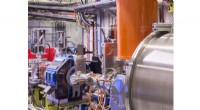
* Particle accelerators: Particle accelerators use special relativity to accelerate particles to speeds close to the speed of light. This allows physicists to study the properties of subatomic particles and the forces that act between them.
* The design of spacecraft: The design of spacecraft must take into account the effects of special relativity. For example, spacecraft traveling at high speeds must be designed to withstand the effects of time dilation and length contraction.
Special relativity is a fundamental theory of physics that has a wide range of applications. It is a testament to the genius of Albert Einstein that he was able to develop such a revolutionary theory over a century ago.