1. The laws of physics are the same for all observers in uniform motion.
2. The speed of light in a vacuum is the same for all observers, regardless of the motion of the light source or observer.
These postulates have a number of implications for our understanding of space and time. For example, special relativity tells us that:
* Time is not absolute, but rather is relative to the observer. This means that two events that occur at the same time for one observer may not occur at the same time for another observer.
* Space is not absolute, but rather is relative to the observer. This means that the distance between two objects may not be the same for all observers.
* The speed of light is the same for all observers, regardless of the motion of the light source or observer. This means that there is no absolute frame of reference.
Special relativity has a number of applications in the real world, including:
* GPS navigation systems: Special relativity is used to correct for the effects of time dilation on GPS signals, which would otherwise cause the systems to be inaccurate.
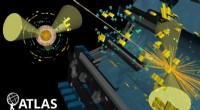
* Particle accelerators: Special relativity is used to calculate the energy of particles in accelerators, which is necessary for understanding how they interact with matter.
* Black holes: Special relativity is used to study the properties of black holes, which are regions of space where gravity is so strong that nothing, not even light, can escape.
Special relativity is a fundamental theory of physics that has revolutionized our understanding of space and time. It is a powerful tool that has been used to make a number of important discoveries about the universe.