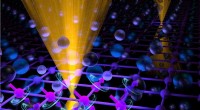
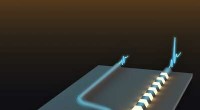
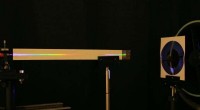
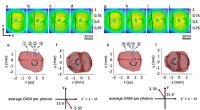
The laser is typically a pulsed laser, which means that it emits light in short, intense bursts. This is necessary to create a plasma with enough energy to vaporize the material. The laser beam is focused onto the material using a lens, and the size of the spot that is vaporized is typically a few micrometers in diameter.
The plasma that is created emits light at a wide range of wavelengths, from the ultraviolet to the infrared. The light is collected by a spectrometer, which separates it into its component wavelengths. The intensity of the light at each wavelength is then measured, and this data is used to determine the chemical composition of the material.
Laser analysis is a versatile technique that can be used to analyze a wide variety of materials, including metals, semiconductors, ceramics, and polymers. It is a non-destructive technique, which means that it does not damage the material being analyzed. It is also a very fast technique, and it can be used to analyze materials in real time.
Laser analysis is used in a wide variety of applications, including:
* Materials analysis: Laser analysis can be used to identify the elements present in a material and to determine their concentrations.
* Environmental monitoring: Laser analysis can be used to detect pollutants in air, water, and soil.
* Food safety: Laser analysis can be used to detect contaminants in food products.
* Archaeology: Laser analysis can be used to analyze ancient artifacts and to determine their composition.
* Forensic science: Laser analysis can be used to analyze evidence in criminal investigations.
Laser analysis is a powerful tool that has a wide range of applications. It is a non-destructive, fast, and versatile technique that can be used to analyze a variety of materials.