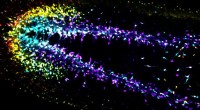
On July 4, 2005, at 10:45 p.m. EDT, the Impactor Spacecraft released the Impactor toward Tempel 1. The Impactor struck the comet's nucleus at a speed of 10.2 kilometers per second (36,720 kilometers per hour; 22,820 miles per hour) at 5:52 a.m. EDT on July 4. The impact created a crater about 160 meters (525 feet) in diameter and 30 meters (98 feet) deep, and ejected cometary material into space.
The Flyby Spacecraft flew past Tempel 1 13 minutes after the impact, at a distance of about 500 kilometers (310 miles). The Flyby Spacecraft's instruments observed the ejecta plume and the crater created by the impact.
The Deep Impact mission was a success. It provided scientists with valuable information about the composition and structure of comets, and helped to improve our understanding of how comets formed and evolved.
Here are some additional details about how the Deep Impact mission worked:
* The Impactor Spacecraft was launched on January 12, 2005, from Cape Canaveral Air Force Station in Florida.
* The Flyby Spacecraft was launched on January 18, 2005, from Vandenberg Air Force Base in California.
* The two spacecraft traveled to Tempel 1 in a "formation flight," with the Impactor Spacecraft trailing the Flyby Spacecraft by about 1,300 kilometers (800 miles).
* The Impactor Spacecraft released the Impactor about 24 hours before impact.
* The Impactor was equipped with a small camera that took pictures of Tempel 1 in the minutes leading up to the impact.
* The Flyby Spacecraft was equipped with a variety of instruments, including a visible-light camera, an infrared camera, a spectrometer, and a dust collector.
* The Deep Impact mission cost about $330 million.
The Deep Impact mission was a major scientific achievement. It provided scientists with valuable information about comets and helped to improve our understanding of the early solar system.