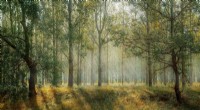
Deforestation in tropical areas impacts not just the local climate but the entire world. People remove areas of rain forest for many reasons, including harvesting wood, clearing land for agriculture and cattle grazing, paving roads and accidental fires. Deforestation causes numerous environmental problems, such as species extinction, other ecosystem changes and climate change. Selective logging causes less damage than clear cutting.
When an area is deforested, many animals and insects lose their habitats. Scientists estimate that tropical rain forests hold over half of the Earth's biodiversity. Many animals living in tropical rain forests require specific living conditions and inhabit only a small area. Therefore, even when humans clear out a relatively small area, species can go extinct. This loss is not just sad; it also hampers science. Organisms, especially plants, are often a source of medical advances for humans, so losing them represents loss of scientific opportunity.
Greenhouse gasses, which contribute to global warming, are released when rain forests are cleared. Trees hold a large amount of carbon, which is released into the atmosphere when they are cut down. Trees also absorb greenhouse gases from industries, so deforestation both releases gases and reduces the rain-forest's ability to remove gases emitted from cars, factories and other sources.
Most nutrients in the rain forest are stored in trees, and some are stored in other plants and animals. These nutrients return to the soil to be used by plants when decomposition occurs, but that process never happens when plant material is removed during deforestation. It can take over 50 years for a clear-cut tropical forest to grow back. Farming further removes nutrients from the soil, making it even less likely that the forest would be able to grow back. Bare areas are also more likely to erode away and lose topsoil.
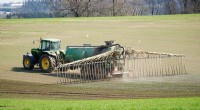
With less shade and fewer roots in the soil, the ground holds less moisture. Because less moisture is evaporating out of the rain forest, there is also less moisture to accumulate overhead and fall down as rain. The result is drier weather and warmer air temperatures. When rain does fall on a deforested area, there are fewer plants to absorb it, so more of the water runs off into nearby bodies of water. If the soil contains cow manure or fertilizer for agriculture, the runoff will pollute nearby aquatic ecosystems.