“Survival of the fittest” takes rather a morbid turn when you consider the idea of overproduction: the idea that species produce far more offspring than an environment can support because most of the juveniles will not make it to adulthood. Humans also overproduce, but in recent centuries, advances in medicine, public safety and food production has allowed most babies to survive and reproduce, creating a problem nature hasn't provided a solution for.
Because it produces so many benefits for the species that engage in it, overproduction has earned a tried-and-true place in evolution. Not only does it ensure that at least some of the offspring make it to adulthood, it allows species to engage in natural variation. If you look at populations of sparrows, beetles or even humans, you can see differences in appearance and character. The huge number of individuals in any population ensures that even though many of them won’t survive, there are still high enough population numbers and genetic diversity to ensure whole-species survival should a crises occur.
In the wild, almost all species overproduce. You can see this in the difference between how many acorns an oak tree puts out each year -- thousands -- versus how many make it to full-sized adults, or how many eggs a salmon lays -- 28,000,000 -- when spawning. Even elephants, who have a longer gestation period than humans, would, in 750 years, produce 19,000,000 descendents per breeding female if all their children survived to adulthood. Since they do not, this excess makes sense.
Human overproduction is taking a different form that than predicted by Charles Darwin and other evolutionary biologists, as the natural course of a species’ reproduction should run. Humans are capable of largely overcoming most setbacks with which other animals in nature must contend, such as predation or lack of food sources. Even considering that much of the world is without enough food, humanity as a whole is able to continue expanding. This has led to overproduction and worry among scientists that, at a certain point, the planet will no longer be able to support the human population.
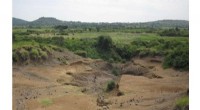
Slightly related to human overproduction, manmade overproduction occurs in species that grow beyond what their natural capacity would be because they are encouraged by humans to do so. Examples of this are fish farming and cattle farming, where more animals than the environment can technically support are bred. When this overproduction of species isn’t limited by nature, the results are often negative. Fish farming, for example, results in depopulating ocean waters to get the raw material to make fish meal. Raising cattle can result in methane gas production, deforestation and erosion.