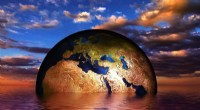
Compared with the diameter of the Earth, which is about 12,800 kilometers (8,000 miles), the atmosphere is paper thin. The distance from the ground to the Karman line, where outer space begins, is 100 kilometers (62 miles). Even though it's so thin, the atmosphere has four layers -- five if you count the vestiges that extend hundreds of kilometers into space. Weather happens in the lowest layer, but climate isn't as localized.
The four layers closest to the surface contain the bulk of Earth's atmosphere, and 75 percent of it is in the troposphere, which is the lowest layer. It extends to a maximum height of 16 kilometers (9.9 miles) at the equator. Above that is the stratosphere, which extends to a height of 50 kilometers (31 miles) and contains the ozone layer. The mesosphere is a thin layer above that, followed by the thermosphere or ionosphere. In this region, the sun's energy is so intense that it breaks all the atoms into positive ions. The last layer, which doesn't have a well-defined limit, is the exosphere.
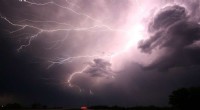
The word "weather" refers to short-lived temperature, wind and precipitation conditions that vary from place to place, while "climate" refers to conditions that affect regions or the planet as a whole over a period of time. Elements of weather include cloud cover, rain, snow, low or high temperatures, storms and wind, and while climate refers to these same elements, it refers to them as an average. Thus, a region with a certain climate can be expected to have certain weather patterns, while others would be unusual.
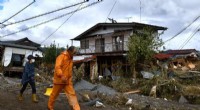
The atmosphere flows like a fluid, with winds generated by temperature differences caused by a variety of factors, including incident and reflected sunlight. These winds collect moisture from the oceans and, when clouds form in regions of appropriate temperature and air pressure, drop the moisture back to the ground. All this activity happens in the troposphere, the lowest layer of the atmosphere. It's the region with the highest concentration of atmospheric gases. Weather is constantly changing and sometimes difficult to predict, and weather services exist worldwide to warn people of dangerous conditions as they develop.
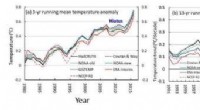
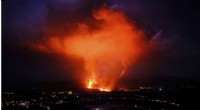
Climate influences include such astronomical factors as the distance of the Earth from the sun and the orientation of the planet as it spins on its axis. Activity at the surface also influences climate, including production of greenhouse gases by natural and man-made processes. It is therefore difficult to localize climate to any one layer of the atmosphere. Processes in the upper stratosphere, such as the interaction of ultraviolet sunlight with ozone, have as much effect as those at the ground level, such as volcanic eruptions that spew dust and gases into the air or rush hour traffic in busy cities, which fills the air with heat-trapping carbon dioxide.