The word ecosystem refers to the all of the living species as well as non-living elements in a particular environmental area, for instance, a lake, swamp, coral reef, forest or prairie. Ecosystems can vary greatly in size and individual characteristics -- for instance, the ecosystem of a puddle differs greatly from that of a swath of tundra. Despite these disparities, all ecosystems function similarly in the way in which energy flows into, through and away from them.
Energy is transferred into and out of ecosystems via a web of complex interactions. Energy enters an ecosystem from external sources and moves throughout its components. For instance, energy from the sun flows through plants, microorganisms and animals. Energy cycles in an ecosystem end with decomposition, and then the process begins anew. Essentially, the flow of energy through ecosystems can be explained by who eats what. Keep in mind, however, that energy transfer isn’t perfectly efficient; much of it dissipates as heat at various phases in the cycle.
Autotrophs are the producers in an ecosystem. The word autotroph means self-feeder. Autotrophs mainly consist of trees, plants, algae and some bacteria. Oftentimes this occurs via the process of photosynthesis, in which producers convert light energy from sunlight, along with water and carbon dioxide, into carbohydrates. The carbohydrates combine with other molecules to form a plant’s basic structural material. However, photosynthesis isn’t the only way that autotrophs convert energy; some autotrophs produce carbohydrates by using chemical or thermal energy instead of solar energy.
The term heterotroph refers to the consumer species in an ecosystem. Heterotrophs are animals and they can be classified into different types depending on their energy source -- that is, what they eat. Consumers may eat exclusively plants, other animals or an assortment of both. Animals who obtain their energy solely from plants are known as herbivores, or primary consumers, while animals who obtain their energy mainly by eating other animals are called carnivores, or secondary consumers. Animals that get their energy from both plant and animal sources are called omnivores. Energy flows through heterotrophs regardless of their type, as they all produce waste and eventually die.
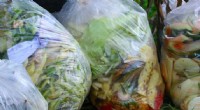
The energy cycle in an ecosystem ends and begins anew with the decomposition process. Certain bacteria, worms, insects, fungi and even mold act as decomposers. They convert organic matter -- mainly the waste or remains of autotrophs and heterotrophs -- into inorganic matter, which the autotrophs eventually use. Matter, though, differs from energy -- in the process of doing their job, decomposers produce heat energy. This is why compost piles are warm. All of the energy that cycled through the ecosystem leaves it in this way.