An ecosystem is a community of living organisms and nonliving objects that are interrelated. An ecosystem is not limited by size. For instance, a fish tank and a lake are both examples of an ecosystem. Terrestrial ecosystems, as the root "terr" implies, are those systems occurring on the ground, as opposed to marine ecosystems, which deal with the oceans. There are four major groupings of terrestrial ecosystems.
Forests can be divided further into four different subgroups, but all of these have a dense tree population and medium to high levels of precipitation in common. Tropical rain forests are home to a great diversity of animals. The climate is hot with excessive rainfall, and vegetation grows in several layers from the forest floor to the canopy. The forests of India and eastern Brazil, however, have specific seasons of rain and dry weather. These forests are called tropical deciduous forests. Coastal coniferous and temperate deciduous forests flank the west and east coasts of the U.S., respectively. They experience four seasons, and only moderate rainfall. The northern Canadian forests are predominately coniferous and experience long sub-arctic winters.
In a grassland ecosystem, many stands of trees are eradicated by brush fires and dry periods (though single trees and a few tree stands do survive). However, the grasslands, as their name indicates, receive sufficient precipitation to sustain different varieties of grasses. Today, many grasslands are becoming endangered because of farmers allowing their herds of animals to overgraze. The grasslands are subdivided into tropical grasslands (also known as the savannas); temperate grasslands, like the prairies of the Midwest in the United States; and the polar grasslands like the northern Canadian tundra.
Deserts are ecosystems with hardy inhabitants, able to survive in an environment that receives less than 25cm of rainfall annually. The desert is home to plants that lie dormant until it rains, then they bloom and spread their seeds, which then lie dormant until the next major rainfall. It is also home to plants capable of storing their own water, such as cacti. Many desert animals survive the searing heat by burrowing or living in caves. These animals are largely nocturnal, staying underground during the heat of the day and foraging for food at night when it is cool.
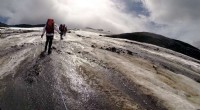
Mountainous ecosystems can often be home to several smaller ecosystems, including meadows or forest regions. Because of steep elevation changes between peaks and valleys, mountainous regions can be quite varied in their climates. Mountain regions are quite sensitive to human impact.
Terrestrial ecosystems are just a part of the planet. Aquatic ecosystems such as oceans, lakes and rivers also host innumerable plant and animal species. The two spheres together offer a complete picture of the interdependence and coexistence of life on our planet.