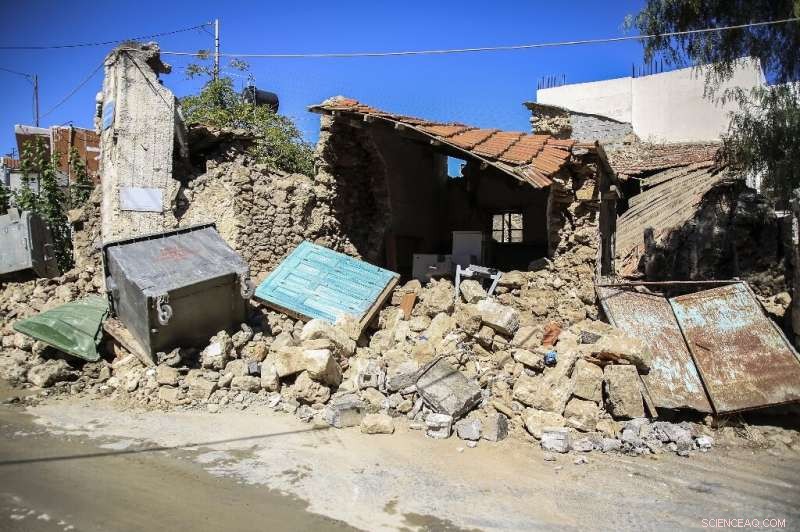
The epicentre was near the agricultural town of Arkalochori.
Aftershocks rattled Greece's largest island Crete on Tuesday, a day after a strong earthquake that killed one person, damaged hundreds of buildings and left many homeless.
The strongest tremor was measured at 5.3 magnitude at 7:48 a.m. (0448 GMT), the Athens observatory said, as Greek Prime Minister Kyriakos Mitsotakis prepared to visit the area.
Crete is Mitsotakis' home island.
A preliminary inspection has shown around a thousand buildings were damaged in Monday's quake, which struck at a depth of just 10 kilometres (6.2 miles).
The epicentre was near the agricultural town of Arkalochori, where a man was killed inside a church that collapsed and nearly a dozen other people were injured.
"It was a very difficult night, we had many aftershocks... we were awake all night," Arkalochori community head Chryssoula Kegeroglou told ERT state radio.
Authorities have put up tents to host hundreds of people whose homes are deemed unsafe to return to at present, and have also made dozens of hotel rooms available.
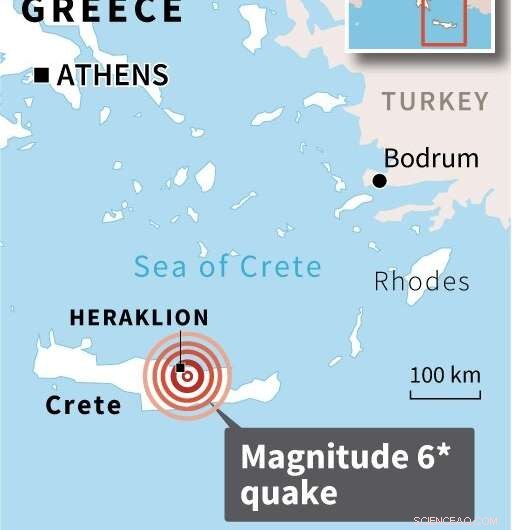
Map locating the epicentre of a quake that hit the island of Crete in Greece Monday.
Kegeroglou said around a thousand people spent the night in tents in the outlying area.
Greece is located on a number of fault lines, and is sporadically hit by earthquakes.
The last deadly quake in the country occurred on March 3 in the central town of Elassona, killing one person, injuring 10 and causing major damage.
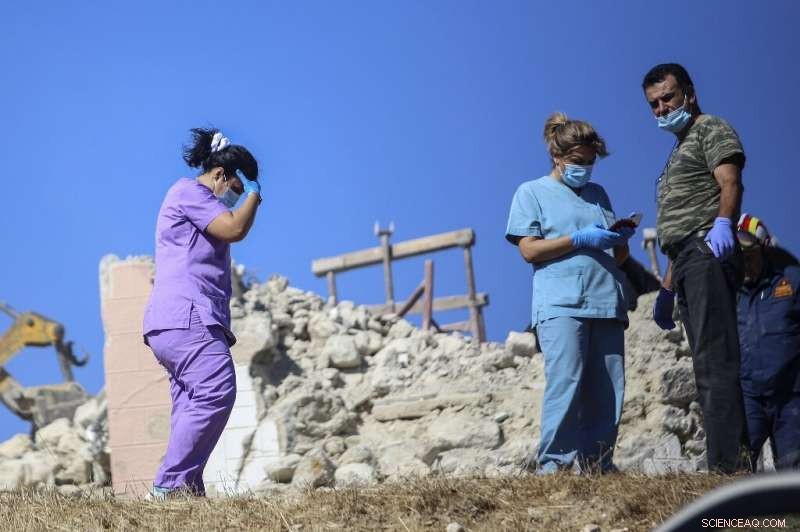
Rescuers searched for survivors in the rubble of a church in Arkalochori.
© 2021 AFP