Credit: CC0 Public Domain
The need to evacuate an intensive care unit (ICU) or operating theatre complex during a fire or other emergency is a rare event but one potentially fraught with difficulty: not only is there a risk that patients may come to significant harm but also that staff may be injured and unable to work.
Therefore, the Association of Anaesthetists and the Intensive Care Society are today publishing new 2021 guidelines regarding fire safety and emergency evacuation of ICUs and operating theatres in Anaesthesia (a journal of the Association of Anaesthetists).
These guidelines have been drawn up by a multi-professional group including frontline clinicians, healthcare fire experts, human factors experts, clinical psychologists and representatives from the National Fire Chiefs Council, Health and Safety Executive (HSE), NHS Improvement, Medicines and Healthcare Products Regulatory Authority (MHRA), and representatives from relevant industries.
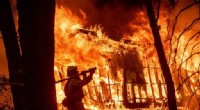
Three fires have occurred in UK ICUs over the past 10 years—at the Royal Marsden Hospital, London (2008), the Royal United Hospital Bath (2011) and the Royal Stoke Hospital (2017) - all of which required full-scale emergency evacuation of patients, staff and relatives. At least five major ICU fires have occurred worldwide during the COVID-19 pandemic, and in the last few weeks three tragic fires have occurred in ICUs in India and Iraq where large numbers of COVID-19 patients were being treated, resulting in multiple fatalities.
During the COVID-19 pandemic, issues around fire safety, emergency evacuations and the safe use of oxygen have become especially relevant, and these are discussed in more detail in an appendix to the guidelines (more details below).
"Our new guidelines include many strategies put in place in Bath following our ICU fire, including additional fire training for staff in their place of work, bespoke fire and emergency evacuation cards placed next to all manual fire call points and changes to the way in which we use oxygen cylinders," explains lead-author Dr. Fiona Kelly, Royal United Hospitals Bath NHS Foundation Trust, Bath, UK.
"Other safety issues raised by our fire required discussion with experts at a national level and were the driver for creating our working party: these include training nominated clinical staff to select and safely use fire extinguishers, improved ventilation of clinical areas where high oxygen flow rates are used and updated recommendations for the design of new ICUs and operating theatres. We hope that the publication of these new guidelines will allow other hospitals to learn from our experience. While these guidelines are designed for ICUs and operating theatres, they are also relevant for respiratory high care areas, emergency departments, coronary care units and monitored beds elsewhere in the hospital."
The guidelines recommend a number of changes to training and preparation, including:
COVID-specific issues
ICU fires occurring in Russia, Romania, Turkey, Ukraine and India were believed to have been caused by faulty ventilators, faulty electrical equipment and/or electrical issues and necessitated large scale evacuation of patients and staff with many fatalities. Specific issues relevant to the COVID-19 pandemic in the UK include:
Dr. Fiona Kelly commented: "The COVID-19 pandemic has made all who work in ICUs and operating theatres look again at the risk of a fire in a clinical area, and at the practicalities of carrying out an emergency evacuation. We hope that improved fire safety and emergency evacuation procedures will be one of the good things to come out of the COVID-19 pandemic and will improve the safety of our patients and staff for years to come. Our thoughts are with all the patients, families and staff involved in the terrible fires elsewhere in the world that have occurred during the COVID-19 pandemic."
Dr. Mike Nathanson, President of the Association of Anaesthetists, said: "Fires in ICUs have occurred for many years. This guideline is hugely important right now following the recent oxygen therapy related fires during the COVID-19 pandemic. Dr. Fiona Kelly and colleagues are to be congratulated on producing this document; every life lost is a tragedy and we hope further deaths from such awful incidents can be avoided."
President of the Intensive Care Society, Dr. Stephen Webb said: "The emergency evacuation of an ICU or operating theatres is complex. Our patients are critically unwell and are likely to be receiving some form of mechanical intervention or organ support which creates a challenge in moving them in an emergency."
"Alongside technical experts in this field, the Intensive Care Society and the Association of Anaesthetists have produced this important guidance. It shares learning from previous evacuations, seeks to help support staff in these emergencies and to safeguard vulnerable patients. It provides the baseline on which standard operating procedures should be built and encourages best practice in emergency planning and preparedness."
Dr. Kelly, Dr. Webb and Dr. Nathanson finish with "We are all deeply saddened by the recent fires in India, Iraq, and Romania and it is our hope the publication of this guidance will support our Intensive Care and Anaesthesia colleagues across the globe, help keep their patients safe and reduce the risk of fire and the need for emergency evacuation in the future."