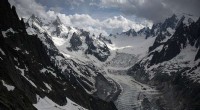
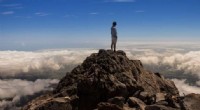
The tundra is the landmass within the Arctic Circle and at extremely high elevations throughout the world. Although it is a biome itself, it does include two types of habitats: arctic and alpine. The arctic tundra encompasses about 20 percent of the Earth’s surface and lies at latitudes 55 degrees to 70 degrees North. The alpine tundra, also treeless and windswept, begins where the tree line ends on mountain peaks.
The tundra is one of the eight basic biomes. The other biomes are the taiga, temperate deciduous forest, scrub forest, grassland, desert, tropical rain forest and the temperate rain forest. The tundra is the youngest biome and was only formed about 10,000 years ago.
The word “tundra” is derived from the Finnish word “Tunturia,” meaning barren land or treeless plain.
The tundra is the coldest of the eight biomes. Summers rarely rise above 50 degrees F. Winter temperatures reach minus 70 degrees F.
The arctic tundra has more than 400 varieties of flowers that are short and grouped together. Many of the tundra’s 1700 species of plants reproduce by division and budding rather than by flowering.
The arctic tundra fields burst into wildflowers such as Alpine Azalea, Reindeer Moss and Western Mountain Heather during its short summers.
The Tundra has an average yearly precipitation of 6 to 10 inches.
The tundra biome has poor nutrients. Phosphorus created by precipitation and nitrogen created by biological fixation are its two major nutrients.
The arctic tundra was traditionally a carbon dioxide sink. This means that it took in more carbon dioxide than it released. With the short summers and cold winters, plants do not decompose and therefore do not give off carbon dioxide. However, global warming is melting several feet of the permafrost allowing the plant mass to decompose and subsequently return CO2 to the atmosphere turning the arctic tundra into a carbon contributor.
Some Russian nickel mines have polluted the surrounding areas so much that the local plants have died. Erosion due to the constant melting and refreezing of the permafrost, have caused tracks made in World War II to become lakes.
The arctic tundra has hordes of insects including black flies, grasshoppers, moths, flies, mosquitoes and arctic bumblebees. Butterflies can also be found in the alpine tundra.
Arctic tundra can be found in Alaska at Lake Clark National Park. Many flowering plants of the Alpine tundra can be found in Rocky Mountain National Park and on the Colorado Plateau.
During the 50 to 60 days of summer, the suns shines 24 hours a day.
The arctic tundra's layers of permafrost or frozen soil go down 1,476 feet below the surface.