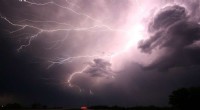
According to French paleontology-founder Georges Cuvier's doctrine of catastrophism, natural catastrophes cause local or species-wide extinctions that pave the way for new species. In this theory, species are immutable and don't change to give rise to other species, as is the case with the slow-moving process of evolution. Instead, the catastrophic removal of one species abruptly creates opportunities for the advancement of existing species.
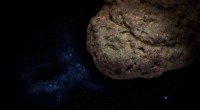
When Cuvier first proposed catastrophism, catastrophes resulted purely from natural phenomena. However, fundamentalists quickly adopted the doctrine to support dramatic, Biblical events that shaped the natural world, so catastrophism became widely associated with supernatural catastrophes. Eventually, Darwin's theory of evolution proved more useful in explaining species variation, and catastrophism was dismissed. However, it reemerged in the late 20th century as neocatastrophism to explain large scale events, such as the extinction of the dinosaurs.