Much of what people know about the animals that inhabited the planet is derived from fossils. Fossils are stone impressions of animal bodies or parts. For fossils to form, a specific set of circumstances must occur. If one or more of these steps fails to occur, a fossil will not be formed and no record of the animals will be left behind after decomposition.
For a fossil to form, an animal must either die in the water or die out of the water and fall into it. Water plays an important part in fossil formation as it helps preserve the dead organism long enough for the fossil to form.
As the animal starts to decay, bacteria eat away at the soft parts, leaving the hard body features, such the exoskeleton or the bones. These hard body parts that are resistant to bacterial erosion are the animal parts that actually form the fossil.
Dirt, mud or dust must then settle over these remains. The more rapidly this sedimentation occurs, the more likely it is that the remains will successfully form a fossil. The type of material that settles over the remains determines how detailed the fossil will be. If fine materials settle, they can capture a more detailed picture of the animal as they can sink further into the fine crevices that made up the animal's body.
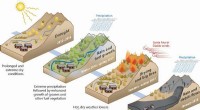
In some cases, mudslides or other Earth-shifting events cause sedimentation to occur very rapidly. When the materials settle over the remains quickly, they serve as a protective barrier, preventing further decay and preserving the remains to allow for fossil formation.
As sedimentation continues, an increasing amount of weight settles onto the organism. As more matter settles, the weight begins to compress the lower layers of soil. This pressure converts the loose matter to hard packed rock and preserves the images created by the animal's remains. As the rest of the animal finally decays, mineral-rich water enters the cavity created; and the minerals harden into a cast that is the same shape as the animal's original skeleton.