Credit: contains modified Copernicus Sentinel data (2020), processed by ESA, CC BY-SA 3.0 IGO
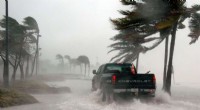
A powerful winter storm, with lake-effect snow, brought blizzard conditions to New York last week and buried the area surrounding the Great Lakes under a blanket of snow. Days of strong winds, with speeds of over 90 km/h, blew lake water ashore, encasing several homes in ice.
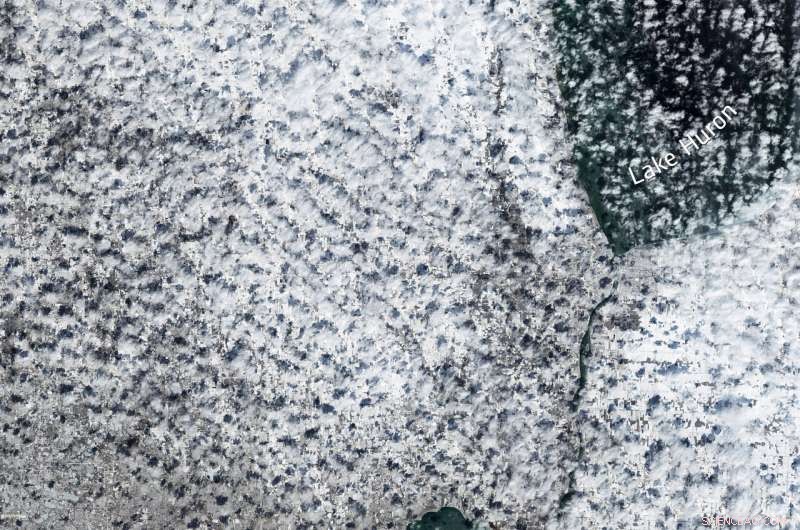
This image, captured by the Copernicus Sentinel-2 mission on 29 February, shows the extent of the snow in the area surrounding Lake St. Clair, Lake Erie and Lake Huron.
A layer of ice can be seen over both Lake St. Clair and Lake Erie.
Lake-effect snow is a weather phenomenon that occurs when cold, dry air picks up moisture by passing over relatively warmer lake waters. The air rises and forms clouds, generating what is known as lake-effect snow. This lake-effect snow is common in the Great Lakes area—where cold air, usually from Canada, moves in.