Credit: CC0 Public Domain
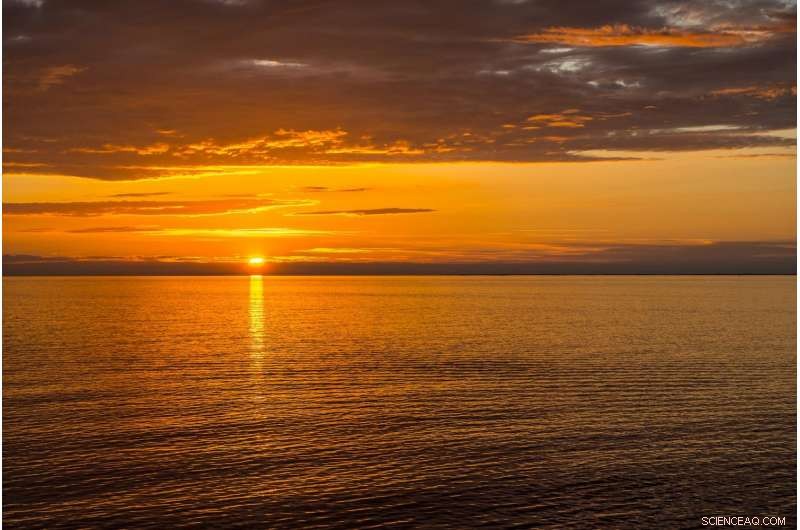
University scientists have contributed to a major new publication by the Marine Climate Change Impacts Partnership (MCCIP) which highlights the current and future impacts of climate change on UK seas and dependent industries and society.
Professor Claire Mahaffey, Professor Jonathan Sharples, Dr. Rachel Jeffreys and Dr. Nova Mieszkowska from the University's School of Environmental Sciences contributed to the MCCIP report which provides a comprehensive, updated review on the range and scale of physical, ecological and societal impacts of climate change on UK coasts and seas.
Launched today (15 January 2020), the report shows that climate impacts for UK coasts and seas are varied and far-reaching, from effects on sea temperatures, oxygen levels and ocean pH, through to shifting species distributions and impacts on habitats, as well as social and economic impacts including risks to cultural heritage sites, potential implications for human health, and likely increases in future coastal flooding.
This confirms findings reported at a global level by the Intergovernmental Panel on Climate Change (IPCC) in their Ocean and Cryosphere in a Changing Climate report last year, who reported climate change as having significant consequences on marine environments globally.
More than 150 scientific experts from over 50 research organizations contributed to the report. Liverpool ocean scientists were responsible for four of the 26 peer-reviewed scientific reports form the basis of the publication. Professor Claire Mahaffey led the report into the threat of oxygen decline in UK coastal waters, Dr. Nova Mieszkowska was responsible for the report on intertidal zones, Professor Jonathan Sharples led the ocean stratification report and Dr. Rachel Jeffreys was responsible for the report into the deep- sea habitats.
Professor Claire Mahaffey said: Our reports provide a synthesis of the best published information in a particular field but more importantly make predictions about what could happen in the future based on the best available model outputs and current understanding of the system. The levels of confidence attached to these predictions are key. Importantly, the reports have highlighted the significant gaps in data and mechanistic understanding that are required to improve confidence in our predictions.
Some key headlines from the MCCIP Report Card 2020 include:
The report collates important new evidence which highlights how climate change has already affected UK coasts and sea, and the ways it will continue to do so in the coming decades. This information is crucial to not only help develop adaptation measures and management actions to support vulnerable marine life and habitats, but also to help UK industries and wider society prepare for and adapt to these far-reaching marine climate impacts.
Matt Frost, MCCIP Chair, said:
"Both climate change and the marine environment are topics that have never been so high on the national and international agenda. It is therefore a privilege for MCCIP to be able to work with our world-class marine science community in providing evidence to inform decisions on the future of our seas."