What Are Convection Currents?
In physics, the conservation of mass and energy reminds us that while nothing is created or destroyed, it can be transferred. One of the most vital mechanisms for transferring thermal energy— the energy that changes temperature— is convection.
Thermal energy moves through three primary channels: radiation, conduction, and convection. Radiation transfers energy via electromagnetic waves (think the Sun warming Earth). Conduction occurs between solids, such as heat traveling from a hot pot to your hand. Convection, however, is the movement of heat through the motion of liquids and gases.
Imagine a kettle on a stove. The water nearest the burner heats first; hot water is less dense and rises. As it climbs, it displaces colder water downward, which then heats, creating a continuous loop of rising and falling fluid—a convection current.
Our planet’s atmosphere is in constant motion, a phenomenon known as atmospheric circulation. This circulation is driven by convection cells that transport warm air from the equator toward the poles. These cells are grouped into three primary zones:
Each cell is essentially an enclosed convection system, so air originating near the equator never reaches the poles directly, which explains the temperature extremes at higher latitudes.
When warm air rises, it leaves behind low‑pressure zones. Cooler air rushes in to fill these gaps, creating wind. The magnitude of the pressure difference determines wind speed.
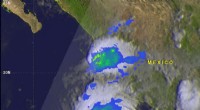
Convection also shapes cloud formation. Cumulus and cumulonimbus clouds form when rising air cools, causing water vapor to condense. These clouds are classic indicators of thunderstorms. As long as convection continues to push hot air upward, storm clouds grow. Once rainfall cools the air, the cycle slows and the clouds dissipate.
A specific type of rainfall linked to convection—convective precipitation—occurs when cumulus clouds accumulate enough droplets to fall as rain. Because the energy involved is high, this precipitation typically arrives in short, heavy bursts, as experienced during summer thunderstorms.
Understanding convection currents is key to grasping everything from everyday weather to global climate patterns.