Ryan Mcginnis/Getty Images
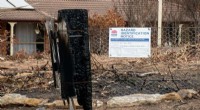
Kansas is synonymous with tornadoes, a reputation famously amplified by the Wizard of Oz. In reality, a tornado would more likely level Dorothy’s house than whisk her away. The United States records the highest number of tornadoes worldwide—about 1,200 annually—making it a tornado hotspot. Between 1994 and 2023, Kansas averaged 81 tornadoes each year, ranking second only to Texas, which averages 135 per year during the same period, according to the National Weather Service.
Both Kansas and Texas sit within “Tornado Alley,” a swath of land stretching from South Dakota to central Texas. The region’s flat terrain provides an unobstructed channel for contrasting air masses: cold air rushes south from Canada, while warm, moist air flows north from the Gulf of Mexico. When these forces collide, the result is often a violent, rotating storm.
John Finney Photography/Getty Images
Creating a tornado requires a specific set of atmospheric conditions. The key player is a supercell thunderstorm—a towering cumulonimbus cloud with divergent wind directions between its top and bottom. This wind shear spins the storm rapidly, forming a rotating updraft that can produce winds far stronger than typical thunderstorms. As the cloud’s rotation intensifies, a funnel cloud forms, and when it contacts the ground, a tornado emerges.
Kansas sits at the crossroads of three major air masses. Warm, dry air from the Mexican desert travels northeastward; moist air from the Gulf of Mexico moves northwest; and cold air from Canada drifts southward. The Rocky Mountains act as a wall that channels these winds through Tornado Alley, while a west‑to‑east jet stream amplifies the turbulence. This confluence creates a perfect storm for supercell development and tornadoes.