Andrew Lichtenstein/Getty Images
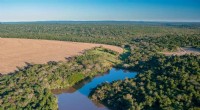
In the heart of California’s San Joaquin Valley, just east of Interstate 5, lies a vast, almost invisible depression that has been quietly shaping the region’s agriculture for generations. The land, which supports sprawling farms of nuts, cotton, safflower, tomatoes, wheat and other staples, was once the bed of the largest freshwater lake east of the Mississippi.
That lake—known as Tulare Lake—covered more than 800 square miles (over 512,000 acres) and was fed by snowmelt from the Sierra Nevada. Its abundant wetlands were a lifeline for the indigenous Tachi Yokut, who called it Pa'ashi ("big water").
By the late 19th century, intensive irrigation projects dammed the valley’s rivers and redirected the Sierra runoff for farmland. Tulare Lake vanished by 1890, leaving behind fertile soil that would soon become the heart of the nation’s food supply. The Tachi Yokut were displaced, and their traditional way of life was irrevocably altered.
Modern climate extremes have resurrected the lake on multiple occasions. The 1930s brought the first flood events that briefly filled the basin. Heavy rains in the 1960s and a significant 1983 storm inundated more than 80,000 acres of cropland. In 2023, an unprecedented series of atmospheric rivers released so much precipitation that the basin swelled to over 100,000 acres—surpassing any previous record.
The sudden return of water proved catastrophic for local agriculture. Orchards and fields were submerged, and the 22,000‑resident city of Corcoran experienced levee breaches that flooded homes and businesses. In response, California declared a state of emergency, erected temporary flood barriers, and accelerated reconstruction of the levee system. The excess water was later diverted into reservoirs and aquifers for future irrigation.
Yet the lake’s return also brought ecological benefits. Migratory waterfowl—including egrets, ibises, sandpipers, stilts and blackbirds—found a new refuge along the restored wetlands. The tule reeds that once defined the shoreline re‑established themselves, providing habitat for a diverse array of species. Though the water receded again the following year, the pattern of cyclical inundation suggests that Tulare Lake will continue to reappear whenever weather permits.
With California’s climate becoming increasingly volatile, the lake’s fate will remain a testament to the delicate balance between human ambition and natural forces.