Scientists have identified a site that could be the most challenging environment for those with arachnophobia. In the limestone caverns beneath the Greek–Albanian border, a team of cavers uncovered a spiderweb spanning 1,140 square feet— the largest known spider web in the world. Researchers estimate that around 111,000 spiders reside within this tangled metropolis, roughly the population of Peoria, Illinois.
The cave, first discovered in 2022, became the focus of an international research collaboration that returned repeatedly over three years. Their findings were published in October 2025 in the peer‑reviewed journal Subterranean Biology, revealing not only the unprecedented scale of the colony but also surprising ecological dynamics.
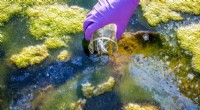
Sulfur Cave is an exceptional subterranean ecosystem. Carved by the Sarantaporos River, its limestone tunnels are lined with natural springs and maintain a constant temperature of about 80 °F. The air, however, is saturated with hydrogen sulfide—high enough to suffocate most fauna—so life there is almost entirely self‑contained.
The record‑breaking structure is a conglomerate of independently constructed webs that have fused into a single, colossal network. These webs were created by two distinct species: the funnel‑web spider Tegenaria domestica—commonly known as the European house spider—and the sheet‑web spider Prenerigone vagans, which prefers moist environments like Sulfur Cave.
Traditionally, Tegenaria domestica preys on Prenerigone vagans, yet in this cave the two species coexist peacefully. Researchers attribute this harmony to the abundant population of midges that become trapped in the web. The midges feed on sulfur‑oxidizing microbes deep within the cave, providing a constant and reliable food source that eliminates competition between the spiders.
Genetic analyses revealed that the cave spiders are distinct from their surface‑world counterparts, underscoring Sulfur Cave’s role as a natural laboratory for studying evolutionary divergence in isolated environments. The unique ecosystem offers biologists unprecedented insights into how species adapt and evolve under extreme conditions.
For arachnophobes, the discovery may be unsettling—but for scientists, Sulfur Cave represents a treasure trove of knowledge about arachnid ecology, subterranean ecosystems, and evolutionary biology.