Andrii Duhin/Shutterstock
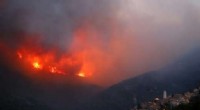
When volcanoes erupt, they can devastate everything in their path—from people to plants and animals. The 1980 eruption of Mount St. Helens remains the deadliest and most destructive volcanic event in U.S. history, burying miles of land in molten lava. In an unconventional effort to aid recovery, scientists from the University of California, Riverside and Utah State University turned to an unlikely ally: the gopher.
Gophers spend most of their lives underground, carving intricate tunnel systems. Their digging and foraging habits can help redistribute soil nutrients and microbes. In 1983, researchers took a handful of northern pocket gophers (Thomomys talpoides) to two small plots on the pumice-covered surface of Mount St. Helens. They left the animals there for just 24 hours, while hardy lupine (Lupinus lepidus) plants struggled to survive.
The experiment paid off. Six years later, over 40,000 lupines were thriving on those two plots, thanks to bacteria and fungi that the gophers had unearthed from beneath the scorched ground. Today, the lasting benefits of that brief experiment are still evident. “In the 1980s, we were just testing the short-term reaction,” said UC Riverside microbiologist Michael Allen. “Who would have predicted you could toss a gopher in for a day and see a residual effect 40 years later?”
Allen and a team of colleagues have monitored the restoration of life on Mount St. Helens, one of several volcanoes that erupted over the past century, damaging ecosystems worldwide. A 2024 paper in Frontiers in Microbiomes detailed how soil bacteria and, most importantly, arbuscular mycorrhizal fungi (AMF) have driven the area’s rebirth. AMF levels were significantly higher in the plots where gophers had been released compared to barren plots.
“Plant roots alone cannot efficiently acquire all the nutrients and water they need,” Allen explains. “Fungi transport these resources to the plant, receiving carbon in exchange.” AMF were also found beneath one of the world’s oldest trees in Chile, helping alerce trees and surrounding vegetation thrive.
Beyond the gopher plots, researchers sampled an old‑growth forest on one flank of the volcano. They discovered AMF in the soil beneath the trees, which extracted nutrients from ash‑covered needles and redistributed them to sustain the forest. “The trees recovered almost immediately in some places,” said UC Riverside environmental microbiologist Emma Aronson. “It didn’t all die as many had feared.”
In contrast, a deforested area on the opposite side of the volcano showed little regrowth. The region had been cleared before the eruption, leaving no needles for the fungi to feed on. Aronson noted, “It was shocking to compare the old‑growth forest soil with the dead area.” These findings highlight the need to protect and restore microbial communities when rescuing damaged ecosystems. University of Connecticut mycologist Mia Maltz, lead author of the 2024 study, added, “We cannot ignore the interdependence of all things in nature, especially the invisible players like microbes and fungi.”