1. Water Retention: Land plants had to develop ways to conserve water, which is much more scarce on land than in water. This includes features like:
* Waxy Cuticle: A protective, waterproof layer on leaves and stems.
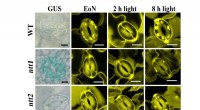
* Stomata: Tiny pores on leaves that can open and close to regulate gas exchange and water loss.
* Roots: Anchoring the plant and absorbing water and nutrients from the soil.
2. Structural Support: Without the buoyancy of water, land plants needed to develop structures to stand upright and resist gravity. This led to:
* Cell Walls: Rigid structures made of cellulose that provide support and shape.
* Vascular Tissues: Specialized tissues (xylem and phloem) that transport water and nutrients throughout the plant.
* Stems: Upright structures that support leaves and branches.
3. Reproduction: Land plants needed to find ways to reproduce without relying on water to carry sperm. This resulted in:
* Pollen: A protective structure that carries the sperm cells, allowing for wind or animal-aided pollination.
* Seeds: A structure containing a food source and protective coating for the developing embryo, allowing for dispersal and delayed germination.
4. Protection from UV Radiation: The atmosphere filters less UV radiation than water, so plants had to develop ways to protect themselves. This involved:
* Pigments: Chemicals that absorb UV radiation, such as anthocyanins.
* Protective Layers: The waxy cuticle also helps to filter out UV radiation.
5. Nutrient Acquisition: Land plants needed to obtain nutrients from the soil, which is different from the nutrients available in water. This resulted in:
* Roots: Specialized structures for absorbing water and nutrients.
* Mycorrhizae: Symbiotic relationships with fungi that help plants access nutrients.
These adaptations, and others, allowed plants to successfully transition from aquatic to terrestrial environments, leading to the diversity of plant life we see today.